
What is the real EPR certificate price and how do you plan for it?
If you manufacture, import or sell products in India that create plastic, electronic, battery or packaging waste, you have probably heard of EPR. Extended Producer Responsibility (EPR) is a legal system that makes the brand owner responsible for managing the waste their products generate. Naturally, one of your first questions is about the actual epr certificate price and how it fits into your business budget.
In simple words, EPR cost is the total amount you pay to get and maintain your EPR certificate. It includes government fees, consultant charges and waste management expenses. Understanding this pricing clearly helps you stay compliant, avoid penalties and protect your brand image.
For many Indian investors and business owners, clarity on EPR spending is as important as clarity on loans or insurance. Just like you study details before choosing a home loan or a policy, you should also study EPR charges before you expand distribution, launch new SKUs or enter new states.
Benefits & Importance of Knowing EPR Certificate Price
Knowing your extended producer responsibility certificate cost in advance helps you plan cash flow. You can spread out expenses through the year instead of facing sudden bills. This is very useful for MSMEs and growing brands that work with tight budgets.
Clear pricing also protects you from hidden fees. When you understand each component of the EPR certification fees, you will ask the right questions and choose partners who are transparent. This keeps your compliance stress free and predictable.
Finally, smart EPR planning adds long-term value. Investors, partners and even lenders are now asking about sustainability and waste compliance. When you show proper EPR registration and timely renewals, you build trust and open the door to better business opportunities.
Required Documents for EPR Certificate (Checklist)
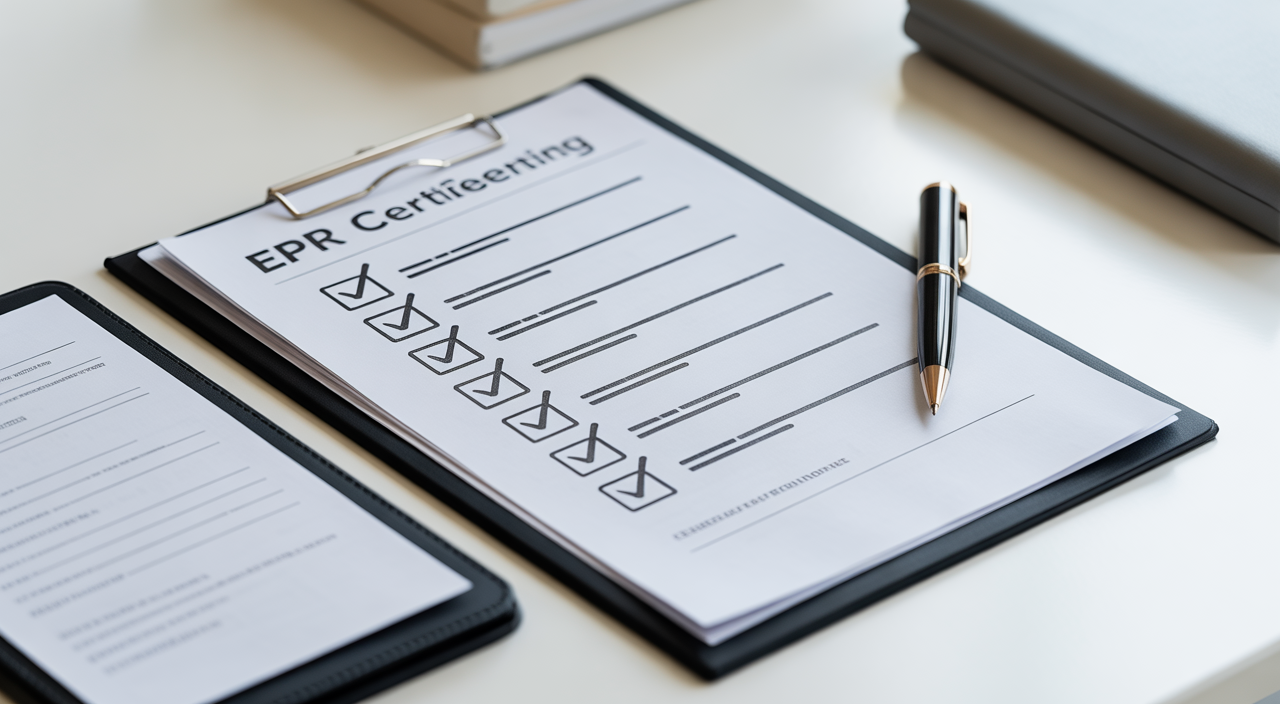
Before you worry too much about epr licence price, it helps to get your paperwork ready. Here is a simple list you can follow:
- Company registration proof such as incorporation certificate or partnership registration
- Manufacturer or importer registration details for your production or trading unit
- Address and GPS location proof of your factory, warehouse or main operating site
- Details of packaging material, such as type of plastic, paper, glass or metal used
- Previous year’s production, import and sales data related to the products under EPR
- Waste handling or recycling records, if you have used recyclers or producer responsibility organisations earlier
- Copy of GST registration and PAN of the business
- Digital signature of authorised signatory for online form submission
Keeping these documents clear and updated saves time and reduces the chance of queries or delays from authorities.
Validity of Your EPR Certificate
Most EPR certificates are valid for one year at a time, depending on the specific waste category and rules. This means the EPR license cost per year is not a one-time expense but a recurring one. You should factor this into your annual compliance budget.
There is usually a renewal window before expiry. Applying within this window makes the epr certificate renewal cost easier to manage, as you avoid late fees or extra documentation. Timely renewal also keeps your operations smooth, without any breaks in import or manufacturing permissions.
Remember that validity of the certificate and your regular compliance reporting are linked but separate. You must continue to file returns and reports as required, even if your certificate is still valid for many months.
Step-by-Step EPR Application Process
The EPR registration fee is only one part of the process. Here is how the journey normally looks for an Indian brand owner:
- Document preparation Collect all documents mentioned above. Get them checked by a compliance expert, if possible.
- Category selection Identify whether you fall under plastic, e-waste, batteries, or other packaging rules, or a mix of these.
- Online form submission Fill the EPR application with correct product details, quantities and targets on the authorised portal or through a trusted service provider.
- Fee payment Pay the applicable government EPR registration fee and any consultant charges as per the agreed structure.
- Technical review Authorities examine your application, documents and targets. They may ask for clarifications or extra documents.
- Certificate issuance Once approved, you receive your EPR certificate, usually in digital form, which you can share with stakeholders and store safely.
Common Mistakes to Avoid (Practical Checklist)
Many delays and extra costs happen due to simple errors. Before you submit, quickly review this list:
- [ ] All documents are current and correctly signed
- [ ] Waste category is correctly chosen as per your product range
- [ ] Production, import and sales numbers match your GST and internal records
- [ ] GPS coordinates and addresses are accurate and verifiable
- [ ] Government fee payment receipt is saved and attached where needed
- [ ] Renewal dates are noted in your compliance calendar well in advance
What Happens If You Ignore EPR Compliance
Ignoring EPR rules can become far more expensive than any epr certificate price. Authorities can levy monetary penalties that may go into several lakhs, depending on the scale and duration of non-compliance.
In serious cases, permissions for import or manufacturing can be stopped until you regularise your status. This affects deliveries, revenue and contracts. For listed or funded companies, repeated non-compliance can also worry investors and other stakeholders.
On the other hand, timely EPR certification and renewal show that you are serious about responsible waste management. This improves your standing with regulators, customers and business partners.
Cost Involved: Rough EPR Certificate Price Range in India
The exact extended producer responsibility certificate cost depends on your waste category, volume of products, choice of recycler and consultant support. Still, this rough table will help you plan:
- Plastic packaging EPR certificate cost range: ₹10,000 – ₹25,000 per year Renewal fee range: ₹8,000 – ₹20,000 per year
- Electronics and e-waste EPR certificate cost range: ₹15,000 – ₹30,000 per year Renewal fee range: ₹10,000 – ₹25,000 per year
- Batteries EPR certificate cost range: ₹12,000 – ₹22,000 per year Renewal fee range: ₹9,000 – ₹18,000 per year
- Paper and cardboard packaging EPR certificate cost range: ₹8,000 – ₹18,000 per year Renewal fee range: ₹6,000 – ₹15,000 per year
These figures are indicative and can change with updated rules or higher waste volumes. Many brands also include recycling EPR charges paid to producer responsibility organisations in their internal costing.
How a Professional Compliance Partner Can Help You
Handling every step of EPR on your own can be time-consuming, especially if you are also focusing on growth, marketing and operations. Working with a specialised compliance team gives you clarity on waste management compliance price from day one.
Good consultants will offer transparent pricing, clear timelines and support for documents, filing and renewals. They also keep track of regulation updates, so you do not miss new requirements. This saves you both time and money in the long run.
If you enjoy learning from structured, easy-to-follow guides, you may also like this helpful article on understanding complex compliance-like technical projects in simple terms, which shows how expert support can simplify heavy processes.
Conclusion: Turn EPR Cost into a Strategic Advantage
For Indian brands, the epr certificate price should not be viewed only as a compulsory cost. When you understand the pricing, prepare documents early and avoid common mistakes, EPR becomes a smooth, predictable part of your yearly planning.
Plan your EPR certificate price just as carefully as you plan other investments. With the right guidance, you can stay fully compliant, impress eco-conscious customers and protect your business from future risks.
FAQs on EPR Certificate Price in India
1. How much does an EPR certificate cost in India?
The cost usually starts from around ₹8,000 to ₹10,000 for smaller paper or packaging categories and can go up to ₹30,000 or more for larger plastic or electronic waste volumes. The final amount depends on your product mix, annual quantity, and whether you hire a consultant or manage everything in-house.
2. What is included in EPR registration fee and related charges?
Government EPR registration fee covers the official processing of your application. In addition, you may pay consultant fees for document preparation and filing, as well as operational EPR charges to recyclers or producer responsibility organisations for achieving your collection and recycling targets.
3. How long is an EPR certificate valid and what about renewal cost?
Most EPR certificates are valid for one year. Renewal usually costs slightly less than the first application, provided there are no major changes in your business size or waste volume. It is wise to budget for at least the same amount annually, so renewal never feels like a sudden burden.
4. Can small Indian startups afford EPR certificate price?
Yes. For startups and smaller brands, many service providers offer flexible plans and bundled services that keep initial costs manageable. Treat EPR as a basic cost of doing responsible business, similar to accounting or tax filing, and include it in your yearly financial planning from the beginning.